I have been doing research on "inbreeding" for a couple years now. Inbreeding
appears to only be useful if you have breeding stock that is exactly what you want. If you inbreed faulty hounds then
you will never develop better ones.
In my book, inbreeding takes place when you breed father/daughter, mother/son, or brother/sister.
Anything beyond these examples I would label as line breeding. Because basically there would be too much out side blood
brought in to really produce a tight gene pool.
Inbreeding is like a double edged knife. It can cut both ways. For example,
you might produce some excellent hounds exactly the way you want them. BUT a recessive trait hiding in your dog's genes might
"pop up" and create undesirable hounds too!
I think if inbreeding is practiced a person should keep the entire litter to see which pup has the genes and traits that
you desire. The pups that carry these genes should be dominant producers for these desired traits. This is why inbred hounds
outcross well with other bloodlines.
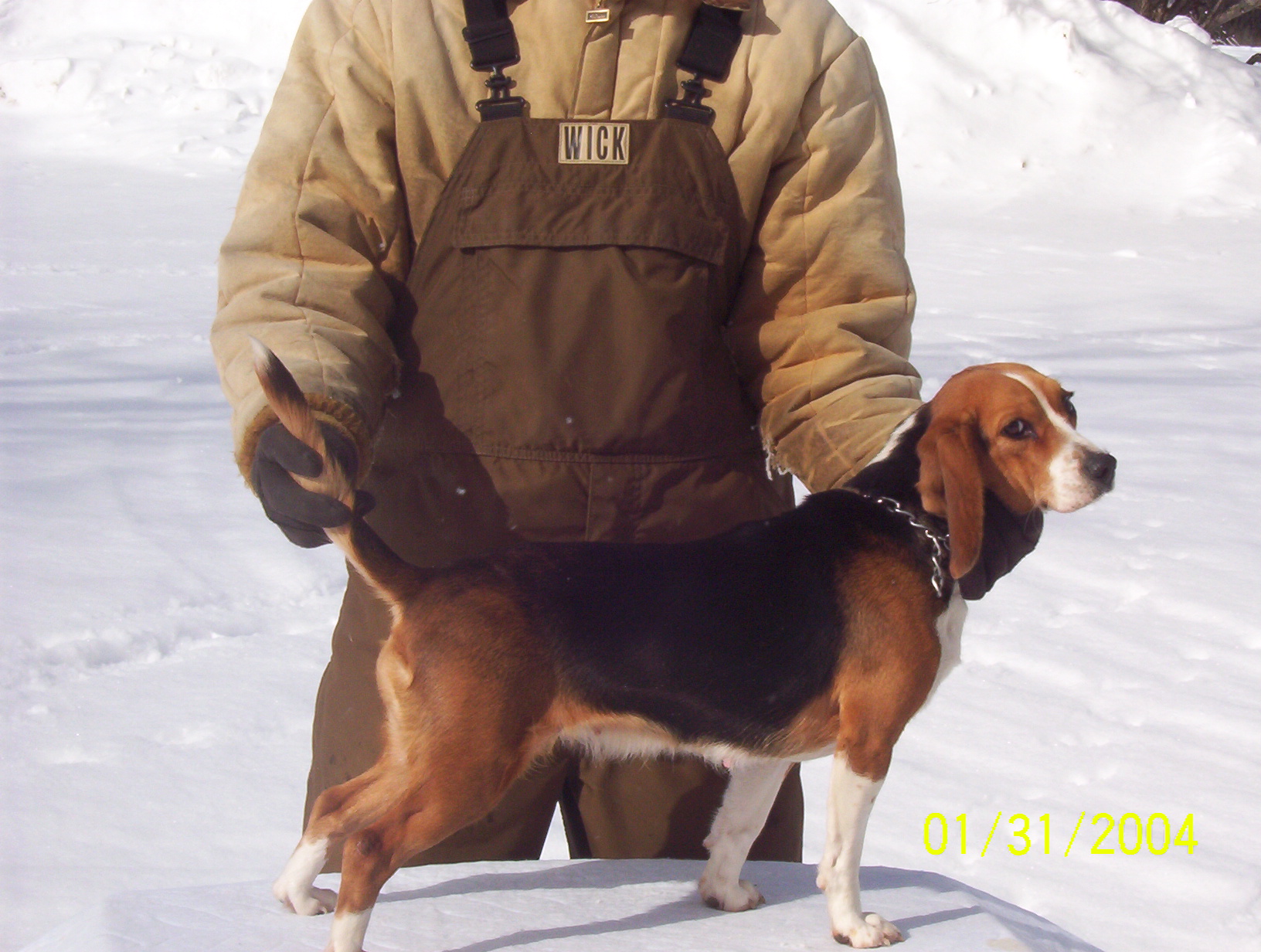
I plan on crossing Lone Pine Lola, who is linebred Rambo x3 to good outcross males.
I prefer that the males are linebred from other lines. I will then take females from these crosses and go back to the Rambo
blood. This process has worked thus far.